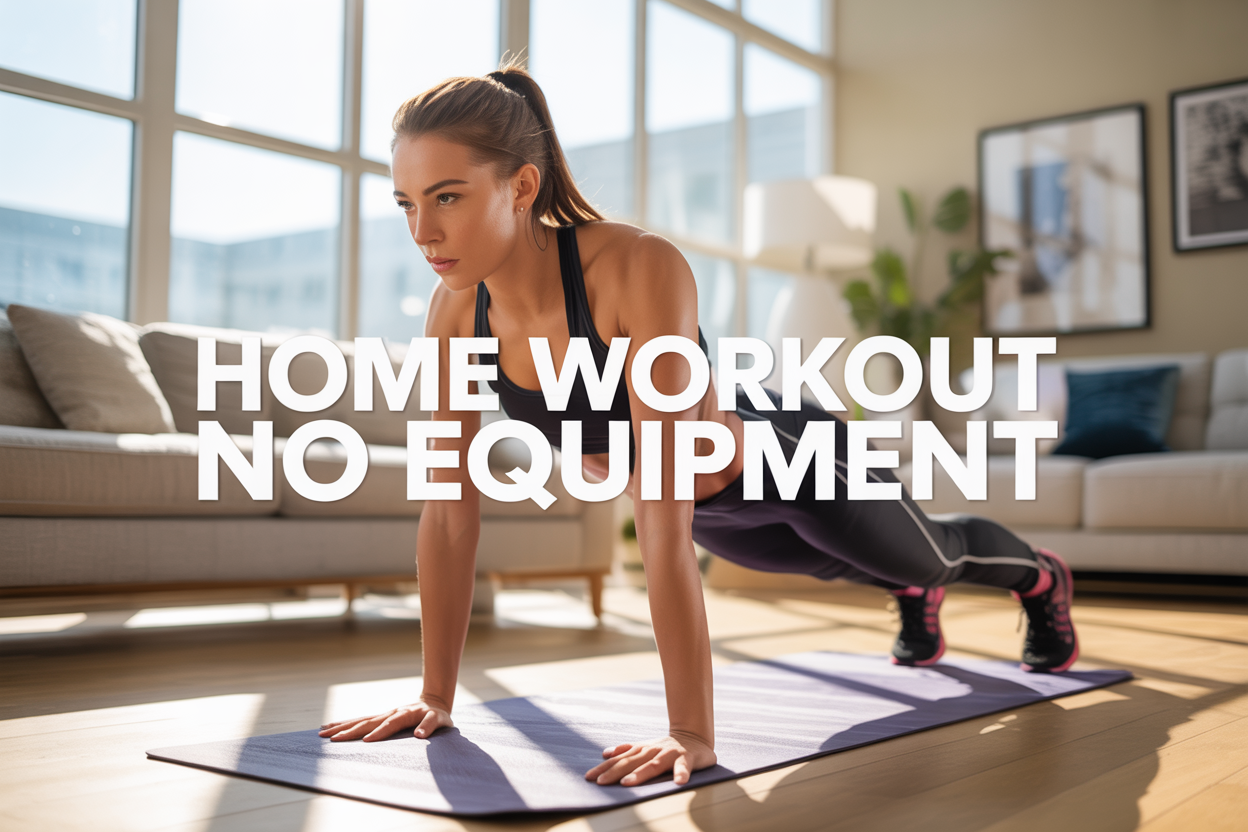
Starting a home workout without equipment doesn’t require expensive gear or a gym membership. This guide is perfect for complete fitness beginners who want to build strength and burn calories using just their body weight.
You can transform your living room into an effective workout space with beginner bodyweight exercises that target every muscle group. No equipment workout routines offer incredible convenience – you can exercise anytime, anywhere, without spending money on machines or weights.
We’ll walk you through the key benefits of equipment free exercises and show you how to prepare your space for success. You’ll discover powerful upper and lower body movements that build real strength, plus energizing cardio routines that torch calories. Finally, we’ll help you create a sustainable home workout plan for beginners that fits your schedule and keeps you motivated long-term.
Benefits of Equipment-Free Home Workouts
Save Money on Gym Memberships and Equipment
Home workout without equipment delivers immediate financial relief. Monthly gym memberships range from $30 to $100, adding up to $360-$1,200 annually. Equipment-free bodyweight exercises eliminate these recurring costs entirely. You won’t need expensive dumbbells, resistance bands, or cardio machines that can cost hundreds or thousands of dollars.
Starting your fitness journey becomes accessible regardless of your budget. Many people delay beginning their fitness routine because they feel they need proper equipment or gym access. Bodyweight training at home removes this barrier, allowing you to start today with nothing more than floor space and motivation.
The savings extend beyond membership fees. You’ll cut transportation costs, parking fees, and the time spent commuting to fitness facilities. These hidden expenses add up quickly, especially when factoring in gas prices and vehicle wear.
Exercise Anytime Without Scheduling Constraints
Equipment free exercises provide ultimate flexibility in your daily routine. Gym hours, class schedules, and equipment availability no longer dictate when you can work out. Whether you’re an early bird wanting to exercise at 5 AM or a night owl preferring late evening sessions, your home workout plan for beginners adapts to your lifestyle.
Busy parents particularly benefit from this flexibility. You can squeeze in a quick no equipment workout routine between meetings, during your child’s nap time, or while dinner cooks in the oven. This accessibility makes consistency much easier to maintain.
Weather conditions never interfere with your exercise plans. Rain, snow, extreme heat, or cold won’t force you to skip workouts. Your living room becomes your reliable fitness sanctuary year-round.
Build Functional Strength Using Your Body Weight
Beginner bodyweight exercises develop strength that translates directly to daily activities. Unlike machines that isolate specific muscles, bodyweight movements engage multiple muscle groups simultaneously, improving coordination and balance.
Push-ups strengthen your chest, shoulders, and triceps while engaging your core for stability. Squats build leg power that helps with climbing stairs, getting up from chairs, and lifting objects. These functional movement patterns make everyday tasks feel easier and reduce injury risk.
Bodyweight strength training naturally promotes proper form and body awareness. Without external weights, you learn to control your own body weight effectively, developing a strong foundation before progressing to more advanced training methods.
Your body provides progressive resistance as you advance. Beginners can start with modified versions like wall push-ups or assisted squats, then progress to standard variations and eventually challenging progressions like single-arm push-ups or pistol squats.
Improve Privacy and Comfort in Your Own Space
At home fitness for beginners eliminates gym intimidation entirely. New exercisers often feel self-conscious about their form, fitness level, or appearance around experienced gym-goers. Your home environment provides a judgment-free zone where you can focus purely on your workout.
You control the atmosphere completely. Play your favorite music, wear whatever makes you comfortable, and take breaks whenever needed without feeling rushed or watched. This comfort level often leads to more consistent workout habits and better long-term results.
Privacy allows you to experiment with different no gym workout routines without embarrassment. You can try new exercises, work on challenging movements, or even dance-based cardio without worrying about others’ opinions.
Your home workout space can be customized to your preferences. Adjust lighting, temperature, and music volume to create the perfect exercise environment. This personalization makes working out more enjoyable and sustainable over time.
Essential Preparation Steps for Success
Create a Dedicated Workout Space in Your Home
Setting up a proper workout area makes all the difference when starting your home workout without equipment journey. You don’t need a massive room – even a 6×6 foot space works perfectly for most bodyweight exercises. Clear out furniture and obstacles that might cause injuries during your no equipment workout routine. A living room corner, bedroom space, or even a garage can become your personal fitness studio.
Check your ceiling height to ensure you can safely perform jumping movements and overhead exercises. Your workout zone should have enough room to lie down completely with arms extended, plus space to step forward and sideways. Good ventilation keeps you comfortable during intense bodyweight training at home sessions, while adequate lighting prevents accidents and helps maintain proper form.
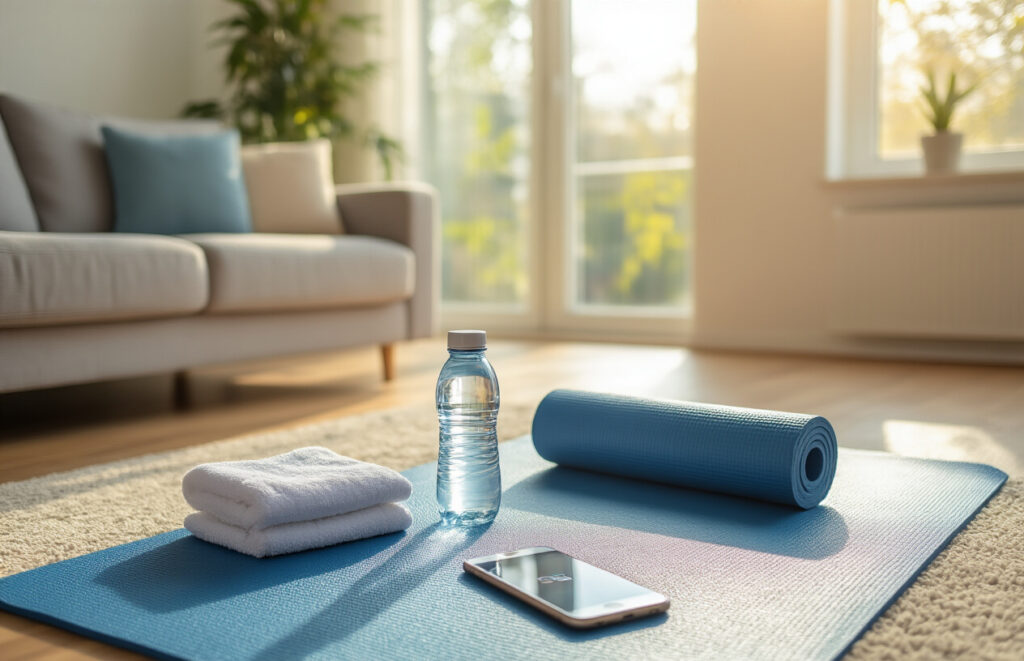
Consider the flooring carefully – hardwood and tile can be slippery, especially when you start sweating. A yoga mat or exercise mat provides cushioning for floor exercises and better grip. If you’re in an apartment, placing the mat over a rug reduces noise for neighbors below during your home workout plan for beginners.
Keep a water bottle and towel within arm’s reach of your designated space. Having these essentials nearby prevents interruptions that can kill your workout momentum and motivation.
Choose Comfortable Clothing That Allows Movement
Your workout clothing directly impacts performance and safety during equipment free exercises. Loose-fitting clothes might seem comfortable, but they can restrict movement during dynamic exercises like burpees or mountain climbers. Choose fitted but not tight clothing that moves with your body without bunching up or sliding around.
Athletic wear made from moisture-wicking fabrics keeps you dry and comfortable throughout your bodyweight strength training session. Cotton clothing absorbs sweat and stays wet, making you feel heavy and uncomfortable. Synthetic blends or merino wool fabrics dry quickly and reduce chafing during longer workouts.
Proper footwear matters more than many beginners realize. Running shoes work well for cardio-focused routines, but cross-training shoes offer better stability for strength exercises. Some people prefer working out barefoot for better ground connection during bodyweight movements – just ensure your floor isn’t slippery.
| Clothing Type | Best Choice | Why It Matters |
|---|---|---|
| Tops | Fitted athletic shirts | Prevents fabric interference during exercises |
| Bottoms | Stretchy leggings or shorts | Allows full range of motion |
| Footwear | Cross-trainers or barefoot | Provides stability and grip |
| Undergarments | Supportive sports bras/compression shorts | Reduces discomfort and distraction |
Set Realistic Goals and Track Your Progress
Starting your at home fitness for beginners journey requires honest goal-setting based on your current fitness level. Many newcomers set overly ambitious targets like working out seven days a week or losing 20 pounds in a month, leading to burnout and disappointment. Begin with three workout sessions per week, focusing on consistency over intensity.
Write down specific, measurable goals instead of vague statements like “get fit.” Better examples include “complete 10 push-ups without stopping” or “finish a 20-minute no gym workout routine three times this week.” These concrete targets give you clear milestones to celebrate and build confidence.
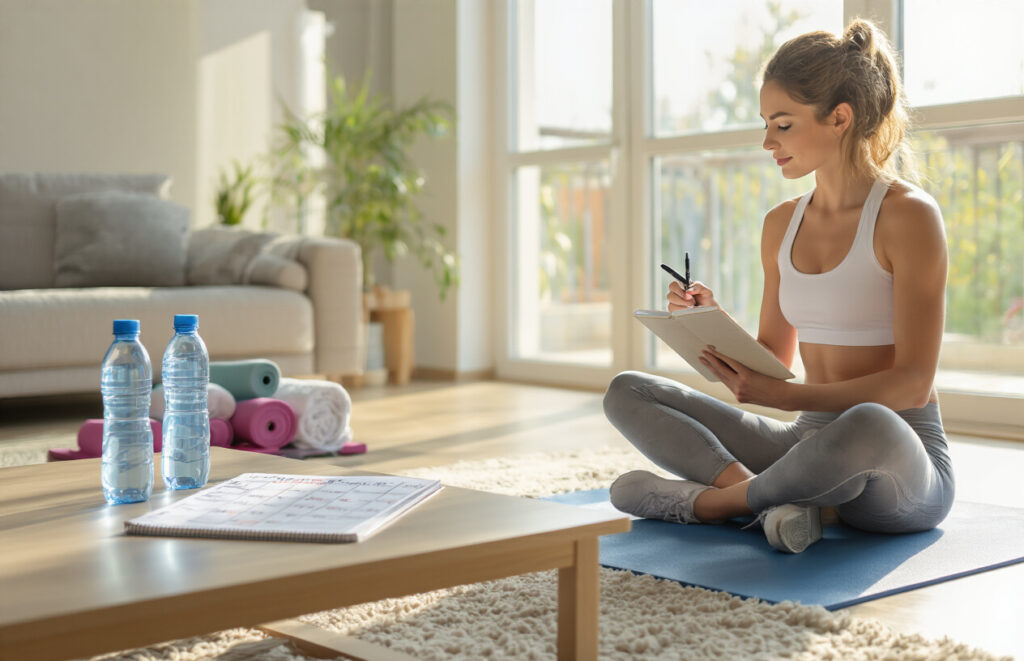
Track your workouts using a simple notebook, smartphone app, or printable calendar. Record which exercises you completed, how many repetitions, and how you felt during the session. This data reveals patterns and progress that might not be obvious day-to-day. Seeing improvement in your logs provides powerful motivation during challenging periods.
Take progress photos and body measurements monthly rather than relying solely on the scale. Bodyweight training at home builds muscle while burning fat, so weight might stay stable even as your body composition improves dramatically. Photos capture changes in posture, muscle definition, and overall body shape that numbers can’t show.
Remember that progress isn’t always linear – some weeks you’ll feel stronger, others might be more challenging. Tracking helps you see the bigger picture and stay committed to your home cardio workout no equipment routine even during temporary setbacks.
Upper Body Strengthening Exercises
Master Push-Ups for Chest and Arm Development
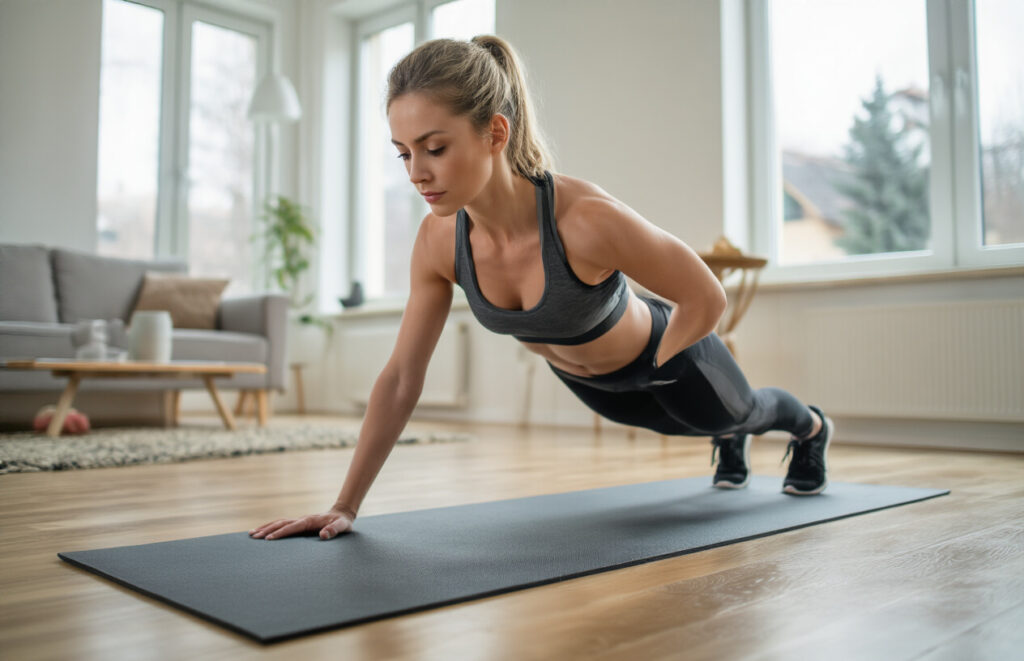
Push-ups are the ultimate bodyweight exercises for building chest, shoulder, and arm strength. Start with wall push-ups if you’re new to fitness – stand arm’s length from a wall, place your palms flat against it, and push your body away. This beginner bodyweight exercise helps you learn proper form without overwhelming your muscles.
Once comfortable, progress to knee push-ups. Place your knees on the ground instead of your toes, keeping your body straight from knees to head. This variation reduces the weight you’re pushing by about 40%, making it perfect for building strength gradually.
Standard push-ups require keeping your body rigid like a plank. Your hands should be slightly wider than shoulder-width apart, fingers pointing forward. Lower your chest until it nearly touches the floor, then push back up with control. Keep your core tight and avoid sagging hips or raised butts.
Progression variations:
- Incline push-ups: Use stairs or a couch for easier angles
- Diamond push-ups: Form a diamond shape with your hands for tricep focus
- Wide-grip push-ups: Target outer chest muscles
- Pike push-ups: Elevate your feet to work shoulders more intensely
Build Core Strength with Planks and Variations
Planks form the foundation of equipment free exercises for core development. The basic plank position mimics the top of a push-up – forearms or hands on the ground, body straight as a board from head to heels. Your abs should feel like they’re bracing for a punch.
Start with 20-30 second holds and gradually increase duration. Quality beats quantity – a perfect 30-second plank trumps a shaky 2-minute attempt. Keep breathing normally and avoid holding your breath.
Essential plank variations for your home workout plan for beginners:
| Exercise | Target Areas | Hold Time |
|---|---|---|
| Standard Plank | Full core | 30-60 seconds |
| Side Planks | Obliques | 15-30 seconds each side |
| Plank Up-Downs | Core + shoulders | 10-15 reps |
| Plank Jacks | Core + cardio | 20-30 seconds |
Side planks specifically target your obliques – the muscles along your sides. Lie on your side, prop yourself up on one forearm, and lift your hips off the ground. Your body should form a straight line from head to feet.
Plank up-downs add dynamic movement. Start in plank position, then lower to forearms one arm at a time, then push back up to hands. This variation builds serious functional strength.
Target Your Back with Superman Exercises
Back muscles often get neglected in no equipment workout routines, but superman exercises provide an excellent solution. Lie face-down on the floor with arms extended overhead and legs straight. Simultaneously lift your chest, arms, and legs off the ground, creating an arch in your back like Superman flying.
Hold the top position for 2-3 seconds before slowly lowering. This bodyweight strength training movement targets your erector spinae, rhomboids, and rear deltoids – muscles crucial for good posture and spine health.
Superman variations to add variety:
- Alternating superman: Lift opposite arm and leg simultaneously
- Superman pulses: Small, quick lifts at the top position
- Superman holds: Longer isometric holds for endurance
- Swimming superman: Flutter arms and legs while holding chest up
The alternating version reduces difficulty while still providing benefits. Lift your right arm and left leg together, hold for 2 seconds, then switch sides. This pattern improves coordination and reduces lower back stress.
Start with 8-12 repetitions and focus on smooth, controlled movements. Your lower back should feel worked but not strained. If you experience pain, reduce the range of motion or stick to the alternating version.
Strengthen Arms with Tricep Dips Using Chairs
Tricep dips transform any sturdy chair into gym equipment for at home fitness for beginners. Sit on the edge of a chair with hands gripping the seat beside your hips. Slide your butt off the chair and walk your feet out slightly. Lower your body by bending your elbows, then push back up.
Chair selection matters for safety. Use a heavy, stable chair that won’t slide or tip. Kitchen chairs or sturdy office chairs work well, but avoid chairs with wheels or lightweight materials.
Progression levels:
- Bent knees: Keep knees bent at 90 degrees for easier resistance
- Straight legs: Extend legs for increased difficulty
- Elevated feet: Place feet on another chair for advanced challenge
- Single-leg: Lift one foot off ground for unilateral strength
Keep your back close to the chair throughout the movement. Your elbows should track backward, not flare out to the sides. Lower yourself until your elbows reach about 90 degrees, then press back up with control.
This no gym workout routine exercise primarily targets triceps but also engages shoulders and chest muscles. Start with 8-12 repetitions and add more sets as you build strength. The beauty of dips lies in their scalability – you can easily adjust difficulty by changing leg position.
Lower Body Muscle Building Workouts
Perform Squats for Powerful Leg Muscles
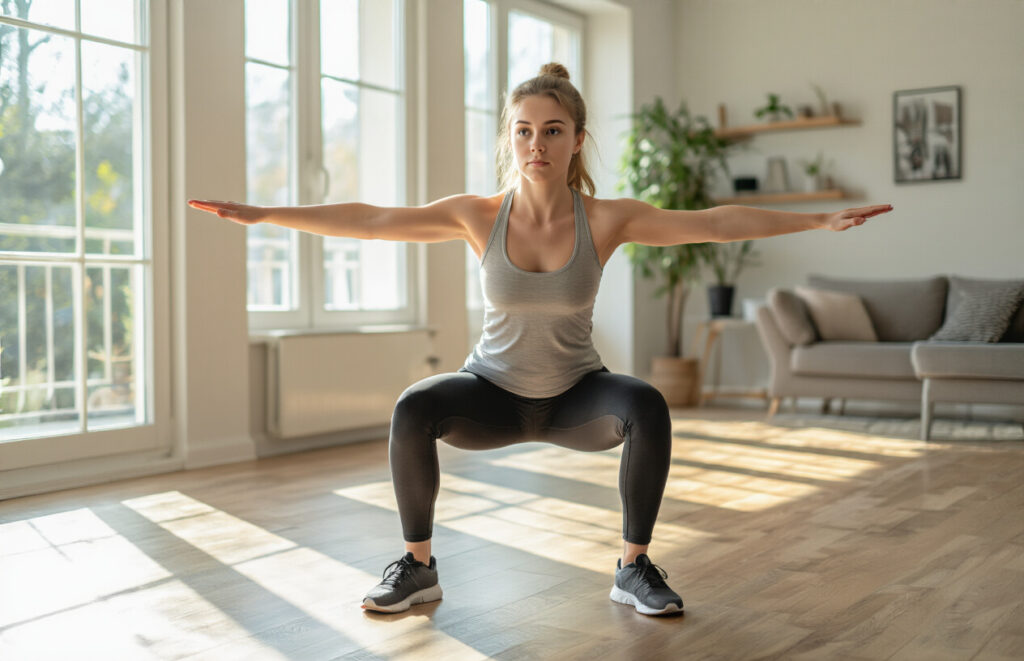
Squats are the foundation of any effective home workout without equipment routine, targeting your quadriceps, hamstrings, and glutes simultaneously. This bodyweight training at home exercise builds functional strength that translates to everyday activities like climbing stairs and lifting objects.
Start with your feet shoulder-width apart, toes pointing slightly outward. Keep your chest up and core engaged as you lower yourself by pushing your hips back and bending your knees, as if sitting in an invisible chair. Your thighs should reach parallel to the floor before you push through your heels to return to standing position.
Common mistakes to avoid:
- Allowing knees to cave inward
- Leaning too far forward
- Not going deep enough
- Rising on your toes
Begin with 3 sets of 10-15 repetitions, focusing on proper form over speed. As your strength improves, increase to 20-25 reps or add variations like jump squats for extra challenge.
Tone Glutes with Effective Lunges
Lunges are exceptional bodyweight exercises that sculpt your glutes while improving balance and coordination. This unilateral movement corrects muscle imbalances between legs and activates your core for stability.
Step forward with one leg, lowering your hips until both knees bend at 90-degree angles. Your front knee should stay directly above your ankle, never pushing past your toes. Push back to starting position and repeat on the opposite leg.
Lunge variations for progression:
- Reverse lunges (stepping backward)
- Side lunges (lateral movement)
- Walking lunges (continuous forward motion)
- Curtsy lunges (diagonal stepping pattern)
Perform 3 sets of 12-16 lunges per leg. The controlled movement burns calories while building lean muscle mass in your lower body.
Build Calf Strength with Heel Raises
Heel raises are simple yet effective exercises that strengthen your calf muscles and improve ankle stability. Strong calves support better walking, running, and jumping performance.
Stand with feet hip-width apart, slowly rise onto your toes by contracting your calf muscles. Hold the peak position for 2-3 seconds before lowering back down with control. For added difficulty, perform single-leg calf raises or use a step for increased range of motion.
Complete 3 sets of 15-20 repetitions, focusing on the squeeze at the top of each movement. This no equipment workout routine exercise perfectly complements squats and lunges for comprehensive lower body development.
Full Body Cardio Routines for Fat Burning
Boost Heart Rate with Jumping Jacks
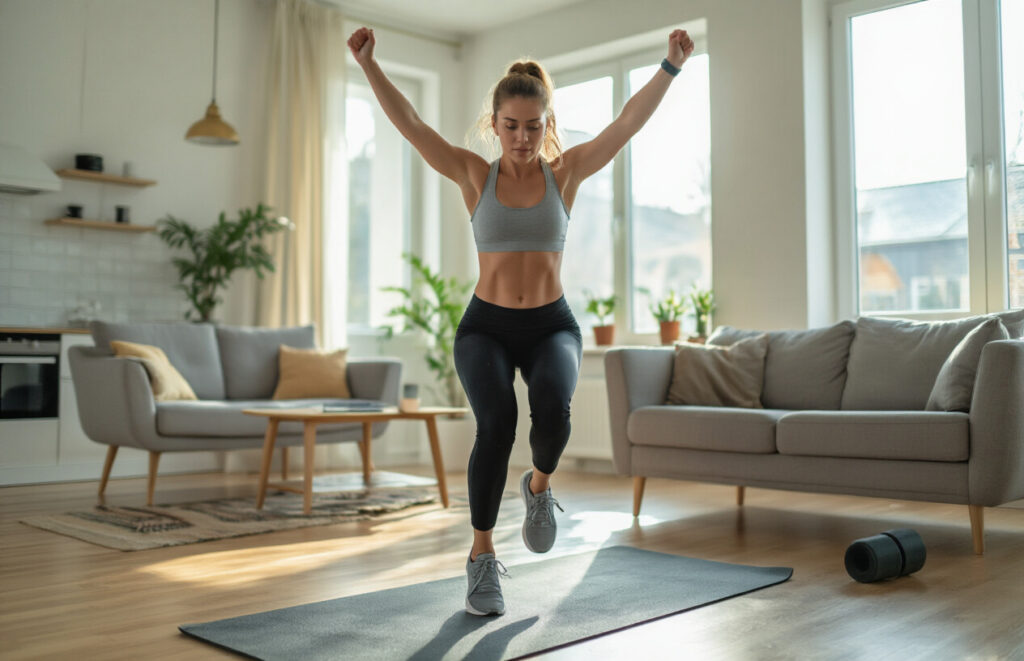
Jumping jacks serve as the perfect starting point for any home cardio workout no equipment routine. This classic exercise gets your blood pumping while working multiple muscle groups simultaneously. Start by standing with your feet together and arms at your sides. Jump while spreading your legs shoulder-width apart and raising your arms overhead. Return to the starting position with another jump.
Beginners should aim for 30-second intervals with 15-second rest periods. As your endurance improves, extend the work periods to 45-60 seconds. Jumping jacks target your calves, quadriceps, glutes, and shoulders while providing an excellent cardiovascular challenge. The beauty of this equipment free exercise lies in its simplicity and effectiveness for burning calories quickly.
Increase Endurance Through Burpees
Burpees represent the ultimate full-body conditioning exercise for bodyweight training at home. This challenging movement combines strength training with intense cardio, making it incredibly efficient for fat burning. Begin in a standing position, squat down and place your hands on the floor, jump your feet back into a plank position, perform a push-up (optional for beginners), jump your feet back to the squat position, and explode upward with arms overhead.
Start with 5-8 burpees per set, focusing on proper form rather than speed. Rest for 30-60 seconds between sets. As you build strength and endurance, increase to 10-15 repetitions. Burpees work your chest, arms, core, glutes, and legs while dramatically elevating your heart rate for maximum calorie burn.
Burn Calories with High Knees and Mountain Climbers
High knees and mountain climbers create an intense cardio combination that targets your core while improving lower body strength. For high knees, run in place while driving your knees up toward your chest as high as possible. Pump your arms naturally and maintain a quick pace for 20-30 seconds.
Mountain climbers start in a plank position with hands planted firmly on the ground. Alternate driving your knees toward your chest in a running motion while maintaining the plank position. Keep your core tight and avoid letting your hips sag. These no equipment workout routine exercises work together to create a powerful fat-burning sequence that challenges your cardiovascular system while strengthening your core and legs.
Improve Coordination with Step-Ups
Step-ups using stairs, a sturdy chair, or even a thick book provide excellent lower body strengthening with cardio benefits. Step up with your right foot, bringing your left knee up toward your chest, then step down with control. Alternate legs or complete all repetitions on one side before switching.
This bodyweight strength training exercise improves balance, coordination, and unilateral leg strength while providing a moderate cardiovascular challenge. Start with 10 step-ups per leg and gradually increase as you build strength and confidence. Focus on controlled movements rather than speed to maximize muscle engagement and prevent injury.
Enhance Agility with Side Shuffles
Side shuffles develop lateral movement patterns often neglected in traditional home workout plans for beginners. Start in an athletic stance with knees slightly bent and feet shoulder-width apart. Step sideways with your right foot, then bring your left foot to meet it without crossing your feet over. Continue shuffling in one direction for 10-15 steps, then reverse direction.
This exercise improves hip stability, ankle mobility, and lateral coordination while providing cardiovascular benefits. Side shuffles work your glutes, inner and outer thighs, and calves while preparing your body for multi-directional movement patterns. Combine all these exercises into circuits for an effective no gym workout routine that burns calories and builds endurance.
Creating Effective Workout Schedules
Design Weekly Training Plans for Consistency
Building a sustainable home workout plan for beginners requires smart scheduling that fits your lifestyle. Start with 3-4 workout days per week, spacing sessions throughout the week to allow proper recovery. A simple Monday-Wednesday-Friday schedule works well for most people starting their bodyweight training at home journey.
Structure each week with specific focus areas. Dedicate one day to equipment free exercises targeting your upper body, another for lower body movements, and reserve the third day for full-body cardio sessions. This rotation ensures balanced muscle development while preventing overuse injuries.
Create realistic time blocks for your no equipment workout routine. Most effective sessions last 20-30 minutes, making them manageable even on busy days. Write down your planned workout times and treat them as non-negotiable appointments with yourself.
Track your consistency using a simple calendar or smartphone app. Mark completed workouts with a checkmark or star to visualize your progress. This visual feedback reinforces positive habits and keeps you motivated during challenging weeks.
Balance Rest Days with Active Recovery
Rest days are crucial for muscle repair and strength gains in your home workout without equipment routine. Complete rest doesn’t mean lying on the couch all day. Active recovery involves gentle movement that promotes blood flow without stressing your muscles.
On rest days, try 10-15 minutes of light stretching, focusing on areas that feel tight from previous workouts. Walking, gentle yoga, or basic mobility exercises help maintain movement patterns while giving your muscles time to recover.
Listen to your body’s signals. If you feel unusually tired, have persistent muscle soreness, or notice decreased performance, add an extra rest day to your schedule. Pushing through fatigue often leads to injury and setbacks.
Plan at least one complete rest day per week where you avoid structured exercise entirely. Use this time for meal prep, planning next week’s workouts, or simply relaxing with activities you enjoy.
Progress from Beginner to Intermediate Levels
Your beginner bodyweight exercises routine should evolve as you get stronger. Start by mastering basic movements with perfect form before adding complexity or intensity. Spend your first 2-4 weeks focusing on movement quality rather than speed or repetitions.
Increase workout difficulty gradually using these progression methods:
- Repetitions: Add 1-2 reps per exercise each week
- Sets: Increase from 2 sets to 3 sets after 2-3 weeks
- Time: Extend workout duration by 5 minutes monthly
- Complexity: Replace basic exercises with challenging variations
| Beginner Exercise | Intermediate Progression |
|---|---|
| Wall Push-ups | Standard Push-ups |
| Assisted Squats | Jump Squats |
| Modified Planks | Full Planks |
| Stationary Lunges | Walking Lunges |
Monitor your progress by tracking how exercises feel during workouts. When an exercise becomes noticeably easier and you can complete all sets with good form, it’s time to progress to the next level.
Your at home fitness for beginners journey should include regular assessment points every 4-6 weeks. Take progress photos, measure your endurance improvements, or simply note how much easier daily activities have become. These markers help you recognize achievements and adjust your no gym workout routine accordingly.
Working out at home without equipment offers incredible flexibility and convenience that fits into anyone’s busy lifestyle. You can build strength, burn fat, and improve your fitness using nothing more than your body weight and a small space in your living room. The exercises we’ve covered target every major muscle group while the cardio routines help boost your metabolism and energy levels throughout the day.
The key to success lies in consistency and proper planning. Start with the preparation steps we discussed, focus on good form over speed, and gradually build up your workout intensity as you get stronger. Create a schedule that works for your routine and stick with it for at least a few weeks to see real results. Your body is the best gym you’ll ever need, so grab some water, clear some floor space, and start your fitness journey today.